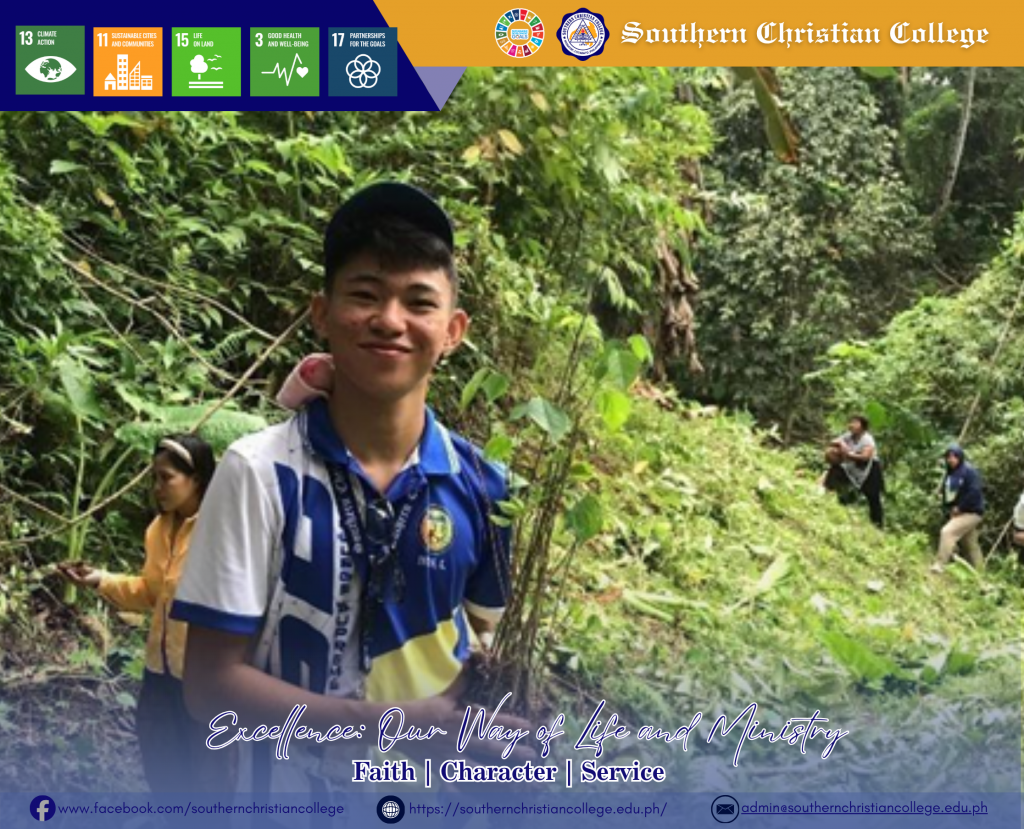
Through the KLIMA Movement (Kalikasan laging Alagaan, Iisang Mundo Mahalagang Panagutan), SCC has pioneered a multidisciplinary model that transforms high-risk environmental “red zones” across Southern Mindanao into active, living laboratories for sustainable adaptation.
Launched under a framework of active civic engagement and supported by the United Board for Christian Higher Education in Asia (UBCHEA), the KLIMA Movement mobilized students and faculty from the different colleges to engineer high-impact, low-cost solutions where they are needed most.
Tech in the Field: Real-Time Early Warning Systems
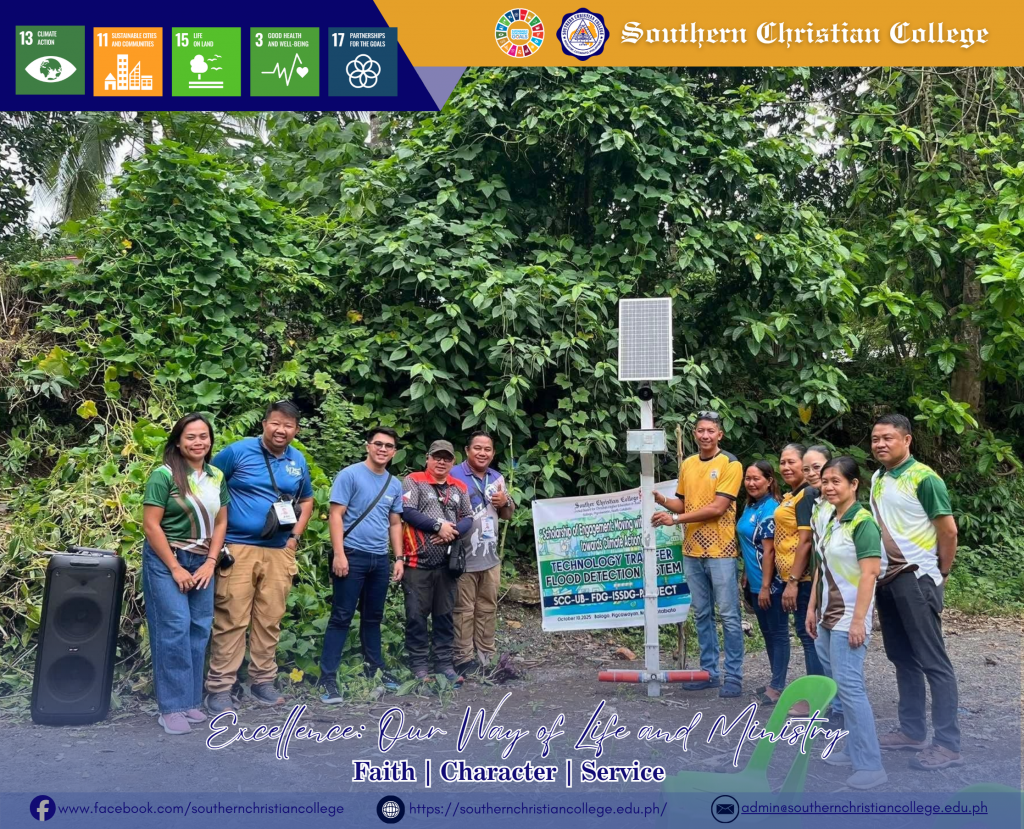
One of the movement’s most impactful achievements is the deployment of custom-engineered IoT Flood Detection Systems. Designed and built by SCC’s BS Computer Studies students, these devices utilized ultrasonic water-level sensors and GSM modules to monitor rising waters in high-risk catchbasins.
While the initial deployment and formal technology transfer to local authorities were celebrated milestones, the technology remains actively deployed and operational on the ground today.
Transmitting real-time data directly to local Disaster Risk Reduction and Management (DRRM) protocols, to the local government units of Barangay Balogo and the municipality of Pigcawayan, the system maintains 100% operational uptime. It continues to provide municipal response units and local families with the crucial minutes needed to prepare for incoming flash floods along the Pulangi and Rio Grande de Mindanao river systems.
Bio-Engineering and Community Health
Technology is only one part of the equation. To address severe riverbank erosion and soil degradation, the KLIMA Movement employs nature-based bio-engineering:
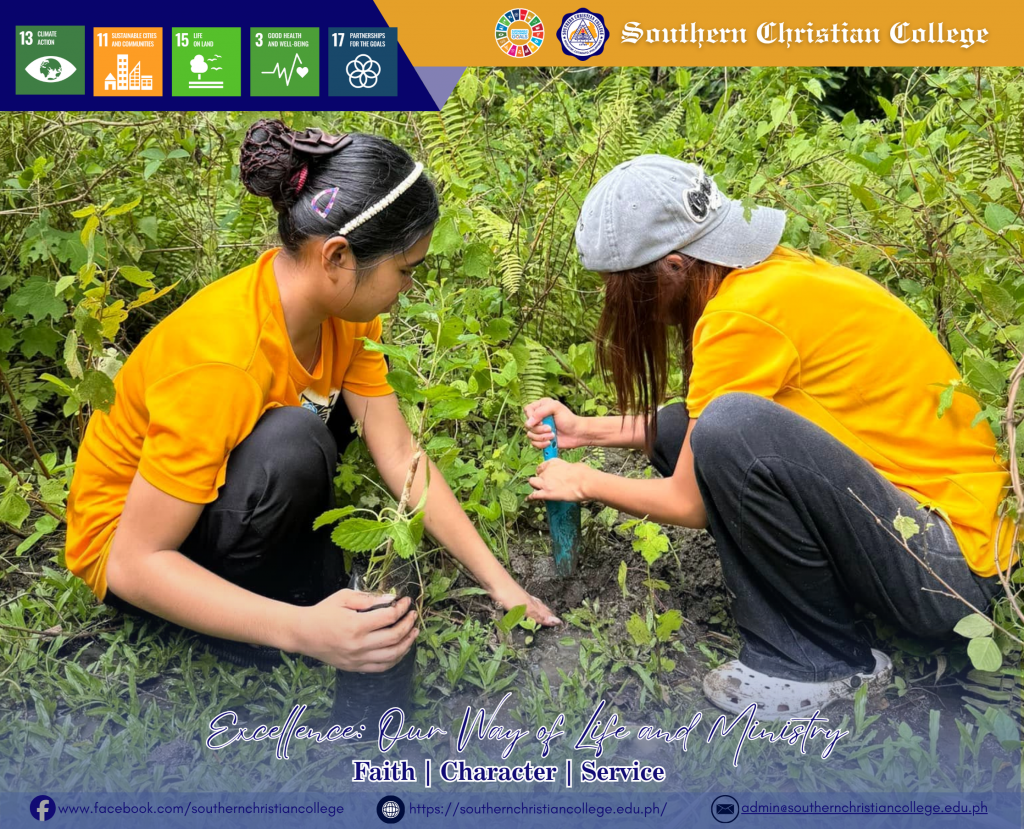
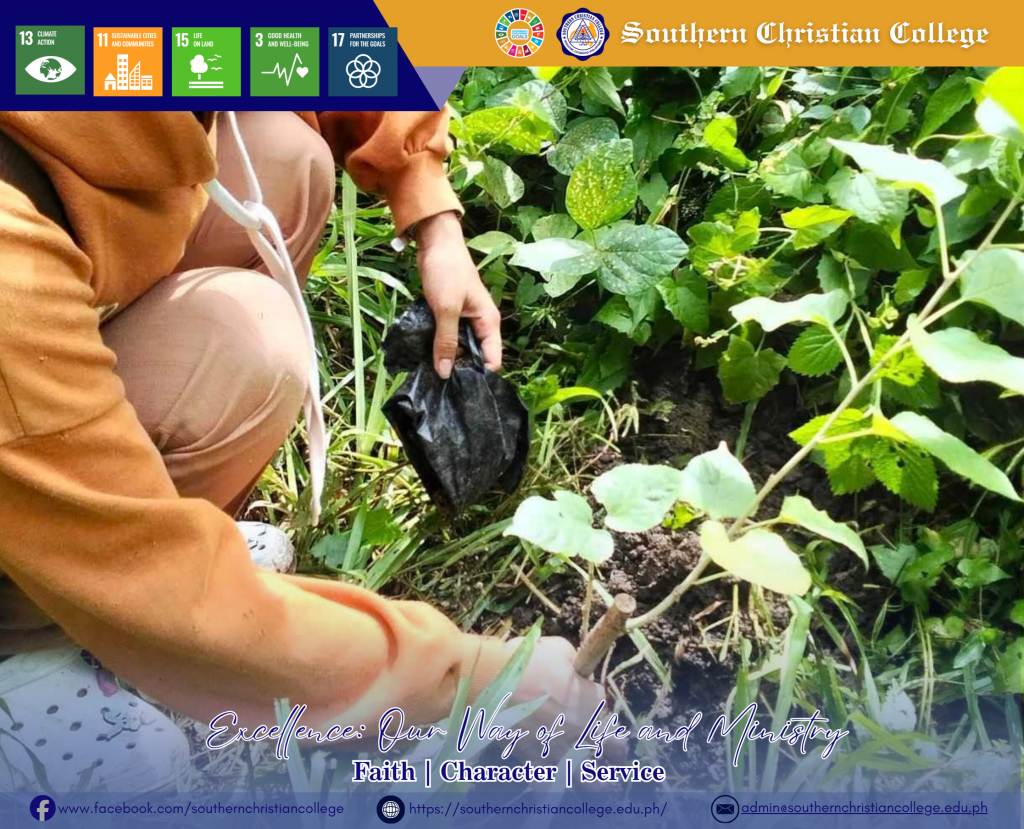
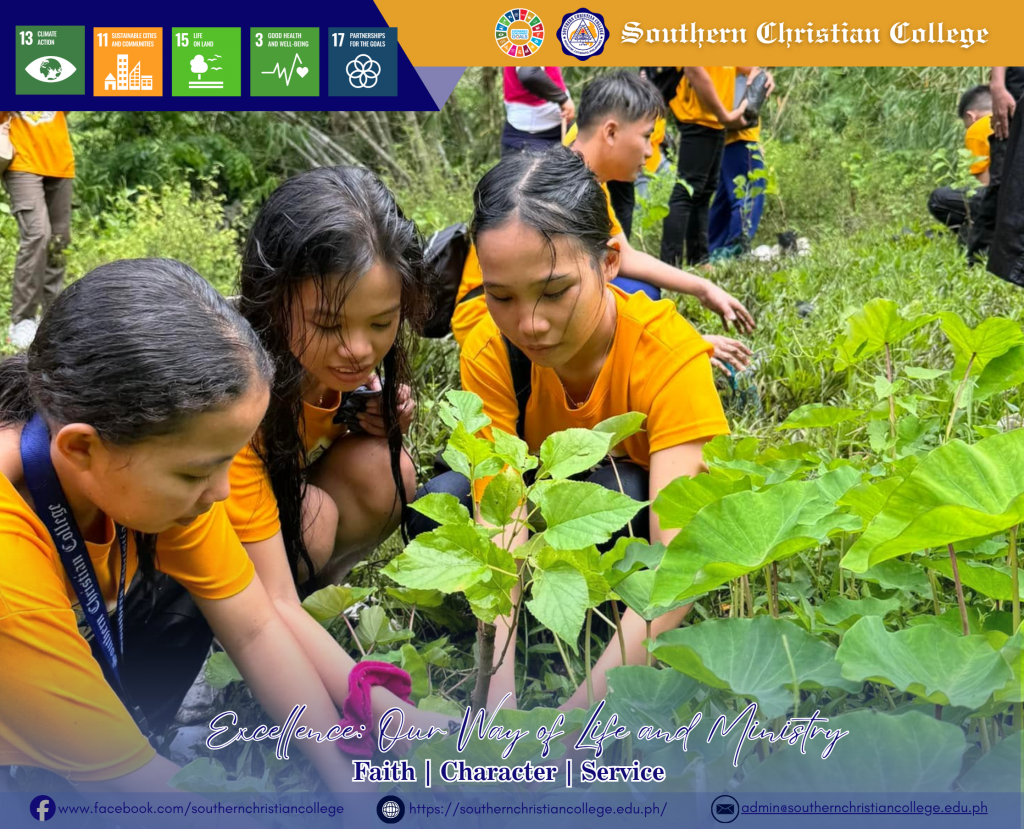
Living Revetments. Students and faculty have constructed green infrastructure along riverbanks using deep-rooted indigenous species like Bayog Bamboo and Molave. These root networks naturally anchor riverbanks, offering a sustainable, self-repairing alternative to expensive concrete river walls.
Living Pharmacies. Linking environmental restoration to community health, students established localized plantings of Calamansi and medicinal trees. This initiative combats local erosion while providing a renewable source of nutrition to help fight malnutrition.
Championing the UN Sustainable Development Goals (SDGs)
The KLIMA Movement directly advances several United Nations Sustainable Development Goals (SDGs) by embedding sustainability into the university’s academic core:
SDG 13 Climate Action – By replacing passive learning with direct field interventions, real-time digital monitoring, and bio-engineering to mitigate disaster risks.
SDG 11 Sustainable Cities and Communities – By strengthening regional resilience in vulnerable lowlands through predictive flood monitoring and protective green infrastructure.
SDG 15 Life on Land – By combating soil erosion, stabilizing watershed areas, and restoring native flora like Molave and Bayog Bamboo across Cotabato’s ecosystems.
SDG 3 Good Health and Well-Being – By integrating nutritional security into ecological work via “Living Pharmacies” that supply vital nutrients to local families.
SDG 17 Partnerships for the Goals – By creating an active network connecting SCC, international supporters like UBCHEA, local government units (MENRO/MDRRMO), and Sangguniang Kabataan (Youth Council) through long-term stewardship agreements.
A Continuing Legacy of Stewardship
SCC’s Klima Movement was ranked Top 32 for SDG- and ESG-based Responses to Past and Present Global Challenges by the World University Rankings for Innovation 2026.
By shifting from generic volunteer activities to targeted, engineered solutions, SCC has empowered over 450 “steward-scholars” to act as true resilience engineers, with the program operationalizing systemic defenses across five vulnerable municipalities in North Cotabato. Supported by active international and local partnerships, the KLIMA Movement demonstrates how academic knowledge can directly safeguard homes, secure food supplies, and protect rural communities for years to come.